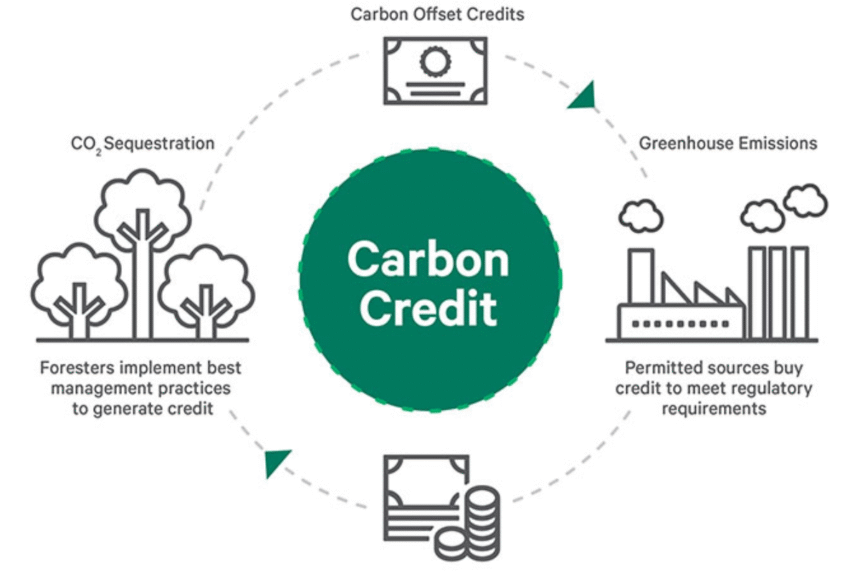
Carbon credits are increasingly key instruments for making money. One tonne of carbon dioxide was removed. Preventive or sequester actions could get rid of this. Credits are proof of environmental qualifications.
In companies that produce a lot of pollution, credit use is going up. Industries that are hard to get rid of utilize them to follow the rules. People buy and sell credits in carbon markets all around the globe. A lot of forestry and renewable energy projects produce these credits.
The price of credit depends on the kind of project. Usually, the premiums for removal credits are higher. For trade to work, there need to be strict rules for measuring and verifying. Without ethics, investors don’t trust the value of money.
Corporate Strategy for Offsetting Carbon
Companies may offset their carbon emissions. Companies get credits from well-known outside programs. An airline could be able to offset the emissions from passenger flights. This helps with the goal of reaching net-zero by 2030.
Offsets are popular with consumers. They are included in ticket sales by airlines. Companies who make things and use technology throughout the world buy. Offsetting gives you some flexibility in the near term as you wait for long-term reduction plans to take shape.
ESG reporting includes financial offsets. Sustainability reports that come out every year list credits that have been earned. It has an effect on how investors see the company and how much it is worth. But, offsets are checked to see whether they work and are real.
Problems with investor trust and market integrity
To keep investors, carbon markets need to be honest. Low-quality credits have a big influence on the climate. Verification agencies need reliable standards for measurement and certification.
A lot of credits are not up to par. Efforts focused on avoidance are more prevalent than those based on elimination. Investors seek proof that the elimination credit scarcity premiums are real. Price changes happen when there isn’t enough of something.
Financial institutions keep an eye on portfolios of carbon assets. Compliance markets manage trading using cap-and-trade. Openness and self-regulation are important for voluntary markets. Good governance builds trust and gets people involved in the market.
Critiques of Offsetting and Risk Mitigation
People don’t like offsetting since it lets pollution happen. Some people claim it lets people not do anything indoors. Critics point to cutbacks in the corporate value chain.
Offsets may hurt your reputation and cost you money. Investors in ESG are looking more and more at climate programs that rely heavily on offsets. Low-quality offsets might undermine the value of a brand. To spread out risk, you need both offsets and direct abatement.
Companies may benefit from sustainability initiatives on-site. Transparency in offset purchase improves relationships with stakeholders. Independent audits make assertions about emissions more believable. Balanced strategies maintain the confidence of the public and investors.
Investing in Long-Term Carbon Insetting
Carbon insetting is good for activities that improve the internal value chain. It immediately pays for cuts in the supply chain or production process. Instead of offsets, insets are acquisitions made inside the company.
Example: renewable energy for the world’s biggest providers. Regenerative agriculture cuts down on emissions from raw materials. In setting connects spending on sustainability to increases in efficiency.
One of the financial benefits is fewer compliance costs. Insets make it easier for suppliers to work together and make the supply chain stronger. Investing in things that will help the environment now will lower your long-term carbon commitments. In setting encourages realistic paths for companies to reach net-zero.
What Will Happen to Carbon Finance Mechanisms in the Future
Carbon funding will expand as rules throughout the globe become stricter. Compliance markets will make allowances very little. Voluntary markets throughout the world will need to have stricter verification rules.
Blockchain verification methods may become more common in credits. Digital MRV makes things clearer and more trustworthy. Tokenized carbon assets could speed up the process of settling.
It is possible that inset strategies will take over corporate sustainability planning. Integrated value chain solutions help the environment and make things more efficient. Balanced carbon companies will be more appealing to investors. Sustainable finance will come from credible ways to cut emissions.